Sun Pain Management

Patient Advocate in Phoenix, Arizona
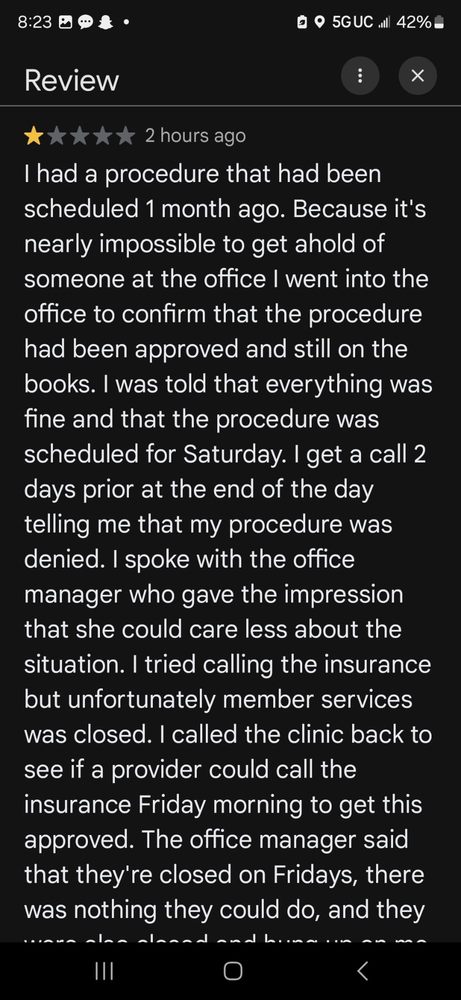
1.9(25 reviews)
(602) 589-050011047 N 19th Ave, Phoenix, AZ 85029View on Yelp
Sun Pain Management - patient advocate in Phoenix, AZ

Customer Reviews

1.9
out of 5
25 reviews

Based on Yelp ratings

Read reviews on Yelp

About Sun Pain Management

Pain management and spine care billing is some of the most contested territory in health insurance. Procedures like spinal injections, nerve blocks, and surgical consultations are frequently denied as not medically necessary, and the criteria insurers use to evaluate these claims are strict and often disputed. Patients at Sun Pain Management in Phoenix may find themselves facing denials after procedures they believed were covered, or prior authorization rejections that delay care they genuinely need. Patient advocates who specialize in pain management and spine billing know the clinical terminology, the procedure codes, and the documentation that insurers require. They've seen the common denial patterns and know how to respond to them effectively. Their goal is to get your claim paid so you can focus on your treatment.

Services

Spine Surgeons
Pain Management

How Sun Pain Management Helps You

Patient advocates working in pain management billing handle a range of disputes specific to spine and pain care. Prior authorization appeals are one of the most common needs: insurers often require step therapy, meaning patients must try and fail lower-cost treatments before approving injections or procedures. If you've already done that but your insurer still denied the claim, an advocate builds the documentation trail showing you've met the criteria. They also handle post-procedure denials for epidural steroid injections, radiofrequency ablation, spinal cord stimulation trials, and other interventional pain treatments. Surgical consultation denials are another common issue, particularly when an insurer argues that surgery isn't necessary. Advocates work with your physician to gather objective findings, imaging results, and functional assessments that support medical necessity. They also handle out-of-network disputes, balance billing issues, and situations where the facility or provider was listed as in-network but claims were processed differently. For Medicare patients, they can assist with redeterminations and ALJ hearings if standard appeals don't resolve the issue.

The Appeals Process

The process starts with a consultation where you share your denial letter, EOB, and any clinical records you have. The advocate reviews the denial reason and tells you honestly whether the appeal is likely to succeed and what it'll involve. For prior authorization denials, they'll map out what documentation is needed to show you meet the insurer's criteria, then coordinate with Sun Pain Management's office to gather it. For post-procedure denials, they review the operative or procedure notes and draft an appeal that connects the clinical findings to the medical necessity criteria in your plan. Most appeals include a detailed cover letter, supporting clinical documentation, and often a physician attestation. If the internal appeal fails, they can file for external independent review or, for Medicare patients, advance to further levels of appeal. The process can take weeks to months, but a good advocate keeps you informed throughout.

Service Area

This advocacy service supports patients of Sun Pain Management in Phoenix and across the greater Phoenix metro area including Scottsdale, Tempe, Chandler, Gilbert, Mesa, Glendale, and Peoria. Phone and video consultations are available, so you don't need to travel to get help. Advocates in this space also serve patients who were referred to Sun Pain Management from outside Maricopa County and may be navigating out-of-network billing situations.

Frequently Asked Questions

My insurer denied my epidural steroid injection as not medically necessary. What are my options?
You can file an internal appeal with supporting documentation from your physician, including diagnostic imaging, examination findings, and a record of prior conservative treatments you've tried. If the denial is upheld, Arizona law gives you the right to an independent external review. These appeals succeed fairly often when the documentation is thorough.
What is step therapy and why does it affect my pain management claim?
Step therapy is a requirement by many insurers that patients try lower-cost treatments before approving more advanced ones. For pain management, that often means trying physical therapy, oral medications, or chiropractic care before approving injections or procedures. If your records show you've done this, an advocate can document that history to satisfy the requirement.
Can I get a prior authorization denial overturned?
Yes, and one of the most effective strategies is having your physician request a peer-to-peer review, where they speak directly with the insurer's medical reviewer. This process changes the outcome significantly more often than written appeals alone. An advocate can prompt your doctor to make this request and prepare them for the conversation.
I'm on Medicare and my pain management claim was denied. What do I do?
Medicare has a defined multi-level appeals process starting with redetermination, then reconsideration, then an ALJ hearing. Each level has a deadline and specific documentation requirements. Arizona's State Health Insurance Assistance Program offers free help navigating this process for Medicare beneficiaries.
I got a large bill from Sun Pain Management that I wasn't expecting. What are my options?
Request an itemized bill and compare it to your EOB to check for billing errors. If you were treated out-of-network without being clearly informed, you may have grounds for a balance billing dispute. An advocate can negotiate with the provider's billing department and your insurer to reduce what you owe.
How long does a pain management insurance appeal take?
Internal appeals typically require a response within 30 to 60 days for standard cases. Urgent appeals, where a denial is affecting your ongoing treatment, must be resolved within 72 hours. If you're waiting for authorization for a scheduled procedure, file for expedited review and clearly state the clinical urgency.
What documentation do I need for a spine surgery appeal?
You'll generally need MRI or CT imaging showing the structural problem, clinical notes documenting your symptoms and functional limitations, a record of conservative treatments you've tried, and your surgeon's letter explaining why surgery is indicated. The more objective your documentation, the stronger your appeal.
Is it worth hiring an advocate for a smaller claim?
It depends on the amount and the complexity. For simple billing errors, you can often resolve them yourself with a few phone calls. But if the denial involves a medical necessity argument, step therapy dispute, or a large out-of-pocket balance, a professional advocate's knowledge and time are usually worth the cost.

Need to appeal an insurance denial right now?

MediAppeal generates AI-powered appeal letters that cite your insurer's own policy language, medical guidelines, and state insurance law. Get your appeal letter in 90 seconds.

Start Your Appeal

Other Patient Advocates in Phoenix, AZ

See all advocates in Phoenix

Patient Advocates in Nearby Cities

MediAppeal
Start Free Trial